

Abstract
Norm Newberger
Driveline R&D Manager, HORIBA Instruments, Inc.
Title: “An overview of HEV E-motor and Transmission Test Stands Using Virtual Vehicle HIL Methods”
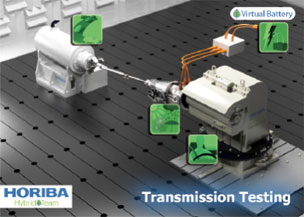
The vehicle must have all its intended components in a pre-production state in order for verification, validation and controller calibration to be done in-lab on a chassis dynamometer. The electrification of the powertrain has made full-vehicle testing more difficult due to the acute unavailability of battery packs and auxiliary power units (APU). However, by expanding the simulation capabilities of the dynamometer controller to include missing subsystems under development or unavailable, transmissions and driveline components can be tested anywhere a dynamometer can be conveniently connected.
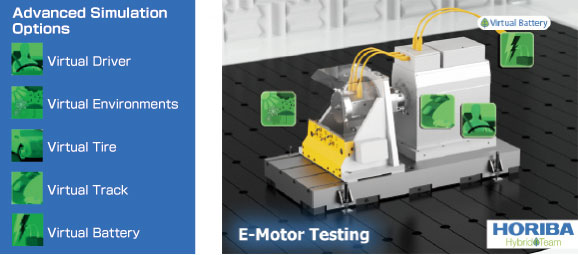
E-motors are also being considered at a variety of locations in the drivetrain. They can be located in the wheels, differential, transmission, or front end accessory drive (FEAD) in addition to the end of the crankshaft. These various alternatives add to the complexity of dynamometer torque, speed, and power capability.
On the power delivery side of the test solution, the power of the battery pack can be simulated by controlling the voltage output of a high power, DC power supply using a real time model of the battery chemistry. Additionally, the torque output of the ICE can be simulated by a real time model of the ICE combustion process and mechanical configuration. HORIBA calls these hardware in the loop capabilities Virtual Battery (VB) and Virtual Engine (VE). Because the kinetic energy recovery in electrified powertrain is critical, tires need to have the dynamics of tire to road surface slip. This presentation will discuss recent VB, VE and wheel slip developments as well as new loading dynamometer characteristics and practical examples of test solutions from HORIBA’s Contract Testing Services Team in Troy, Michigan.
Feedback or Comments on Abstract?
Please contact HORIBA